The 7-Second Brand Judgment: Why Your Brand Wins or Loses Before You Even Speak
What the Brain Does When It Meets an Expert
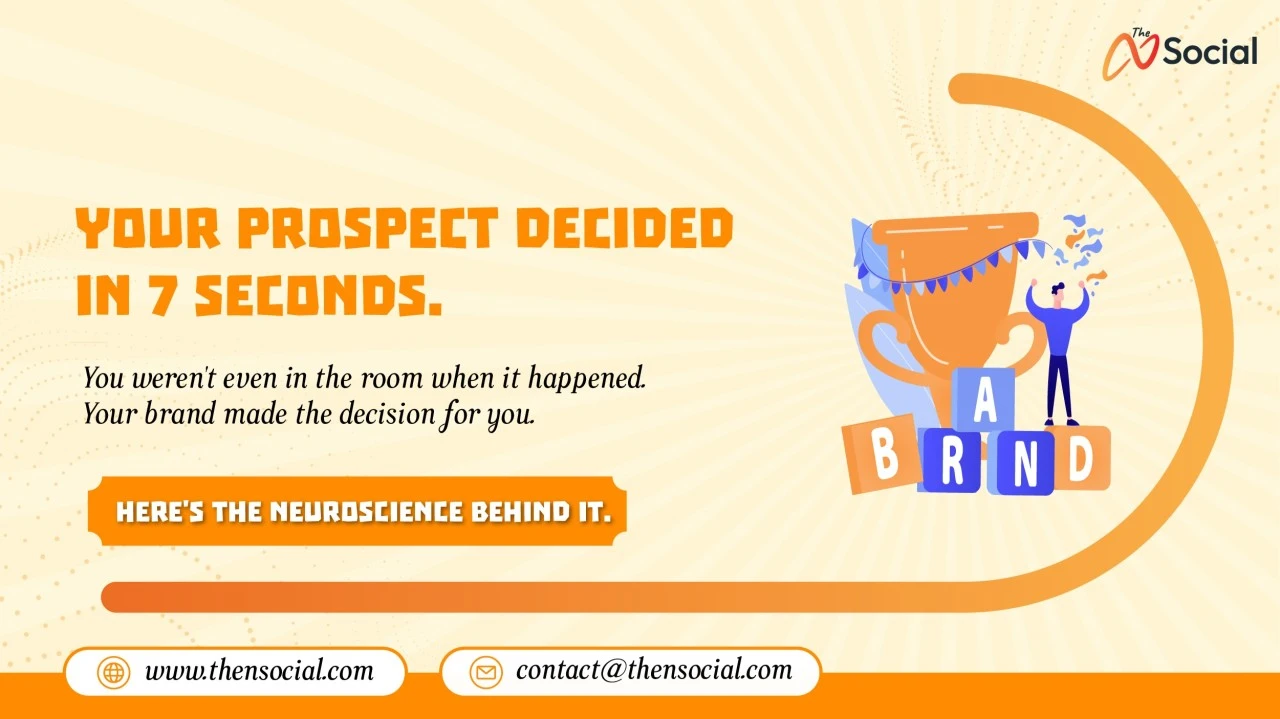
You've lost clients you never got to pitch. Lost deals before the first call. Lost trust before you typed a single word. Not because your product was weak. Not because your pricing was off. Because your brand fired the wrong signal in 7 seconds and the brain made a judgment so fast, so final, that no follow-up email could undo it. This isn't opinion. This is neuroscience.
The Science Is Real
In 1992, psychologist Nalini Ambady showed participants 6-second silent clips of professors teaching. Participants judged competence, warmth, and trustworthiness with startling accuracy. The brain didn't need more time. It had already decided. This is called thin-slicing' — your brain takes a razor-thin slice of input and extrapolates an entire conclusion from it. Trustworthy or not. Worth my time or not. Safe or skip. Your brand is being thin-sliced every single time someone encounters it. Your profile photo. Your headline. Your website. Your first sentence. Every touchpoint is a 7-second trial. Most brands are failing it silently.
Why Logic Doesn't Save You
Most brands market to the prefrontal cortex, the logical, analytical brain. Beautiful decks. Detailed case studies. ROI projections. Here's the problem. The prefrontal cortex isn't the first brain your prospect uses. The first brain is the amygdala, the brain's threat-detection system. It answers one question in 33 milliseconds: Is this safe or dangerous? Before your prospect reads your headline. Before they process your logo. Before they consciously register anything. Their amygdala has already issued a verdict. Trust. Or skip. Uncertain brains don't buy. They exit quietly, without explanation.
3 Signals Your Brand Is Always Broadcasting
Signal 1 — Competence
The brain scans for patterns it associates with authority. Inconsistent visuals, vague headlines, mismatched tone — all of these break the pattern. Broken patterns signal low credibility.
Signal 2 — Warmth
Harvard research confirmed warmth judgments happen faster than competence judgments. Coldly transactional brands lose business to less experienced competitors who simply feel more approachable.
Signal 3 — Distinctiveness
The brain is a prediction machine. When your brand looks like everyone else, it gets filed under generic and ignored. Neuroscientist Antonio Damasio confirmed emotional distinctiveness is weighted as heavily as rational quality in decision-making.
Most brands in your industry are broadcasting the same signal. Same colours. Same stock imagery. Same "we help businesses grow" headline. The brain, overwhelmed with identical input, chooses none of them.
Why Warm Leads Go Cold Before the Call
You've lived this scenario: Someone finds you online. Right industry. Right pain. Real potential. They visit your profile. And then — nothing. You assume bad timing. Wrong budget. Not ready. Here's what actually happened. In 7 seconds, they received conflicting signals. Strong content but dated visual identity. Sharp headline but vague testimonials. Great service page but a profile photo from 2019. That conflict created cognitive friction. And the brain, when faced with friction, doesn't push through. It exits. No drama. No explanation. The tab just closes. This is the invisible conversion leak no analytics dashboard will ever show you because the prospect never became a lead.
How to Diagnose Your 7-Second Signal Right Now
Run this before you create another piece of content:
The stranger test
Ask someone unfamiliar with your brand to look at your LinkedIn profile for 7 seconds. Ask them: What does this brand do? Who is it for? Would you trust them with a serious project? Vague answers mean a broken signal.
The scroll test
Open your own feed and scroll at normal speed. Does your content stop your own thumb? If you wouldn't pause for it. your audience won't either.
The first sentence test
Read your bio headline out loud. Does it speak to a specific pain? Or does it sound like every other brand in your space?
If any of these reveal friction, you have a 7-second problem. And it's costing you clients you'll never know you lost.
The Brands That Win
The brands that consistently win the 7-second judgment share four things:
→ Visually congruent across every touchpoint → Neurologically distinct — the brain files them as different → Language that speaks to pain before it describes a service → A signal so consistent it doesn't shift with trends
These brands don't just look good. They feel like a decision already made. That's not design. That's neuro-engineering.
Final Thought
You've spent years building expertise. But if your brand is losing the 7-second judgement, none of it reaches the people it was built for. The brain decided. Before the email. Before the call. Before the pitch. The question isn't whether your brand is being judged in 7 seconds. It is. The question is whether you've engineered what that judgement says.
At TheNSocial , we build brands the brain trusts before it knows why.